
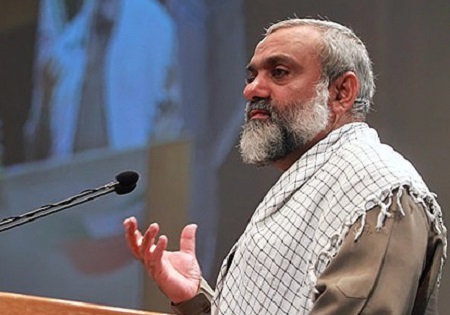
Ahlul Bayt News Agency - Commander of Iran's Basij (volunteer) Force Brigadier General Mohammad Reza Naqdi underlined that the western states have sat to the negotiating table with Iran because they are afraid of Islam and the Islamic Revolution.
"What has pushed the West to the negotiating table today is not nuclear concerns, rather it is their fear of the (Islamic) Revolution and Islam," Naqdi said, addressing a gathering in Western city of Shahr-e Kord on Wednesday.
He referred to the western states' failure in achieving their goals through the wars that they led in Syria and Iraq, and said they have now resorted to arming the terrorist groups to make the Iraqi nation surrender, but to no avail.
Naqdi described expansion of the Zionist entity as the West's main goal of stirring wars in the region, and said they spent lots of money on organizing the ISIL but the Iraqi people came onto the scene and made the enemy leave their country.
Stressing that the pillars of the US power are collapsing, he said despite the huge arms supplies given to the savage Saudi regime, Washington has faced the resistance and advance of the revolutionary forces every time it declared war.
In relevant remarks earlier this month, Naqdi said the allegations raised by the US against Iran's peaceful nuclear program were aimed at keeping the Israeli and Saudi regimes safe and influential by undermining Iran's growing clout and power in the world.
Naqdi said Iran's influence is growing globally, and its ideology is gaining more and more advocates throughout the world, an instance of which was seen in the Awakening moves that took place in the region in the last few years, and the West is afraid that this influence and ideology might soon result in the collapse of the Israeli and Saudi regime.
"They want to save the Zionists and al-Saud" from the threat of imminent collapse by raising allegations against Iran's nuclear program, but they should know that as stated before by Supreme Leader of the Islamic Revolution Ayatollah Seyed Ali Khamenei, "whatever the results of the nuclear talks (between Tehran and the world powers) will be, if any agreement is or isn’t reached, the region will grow more insecure for the Zionists every day", Naqdi said.
He said the US-led West is seeking hard to undermine or contain Iran's increasing power on the international scene through various means and different pretexts, but to no avail.
Raising the question why the world powers, specially the US, are showing unusual behavior in their nuclear talks with Iran, including having long hours of negotiations without any rest with Tehran, returning to the venue of the talks several times to continue negotiations, cancelling all their meetings and working agenda for the talks with Iran, and US President Barack Obama's personal supervision over the negotiations with Iran, Naqdi said only a mentally retarded person would accept that all these efforts have been made to increase Iran's possible breakout time from three months to one year, and stressed that Iran has never been after developing nuclear bombs and the West knows this fact very well.
The Basij commander asked why such measures have not been adopted in negotiations with North Korea which already possesses nuclear weapons.
Naqdi said under such conditions that the region and the world are witnessing new developments with a very fast momentum, the world powers are being isolated and the pressures on the Israelis, Wahhabis and Takfiris, are being increased, "the Islamic Iran ('s role) is growingly important and decisive in this trend since it is the source of inspiration for all these (awakening) moves".
Stressing that Iran has today grown into a world power, he said they cannot stop the country's growing power by military strikes given their recent failures in Lebanon, Palestine and Iraq wars and the US army's incapability and the dire economic situation in the US.
/257



